




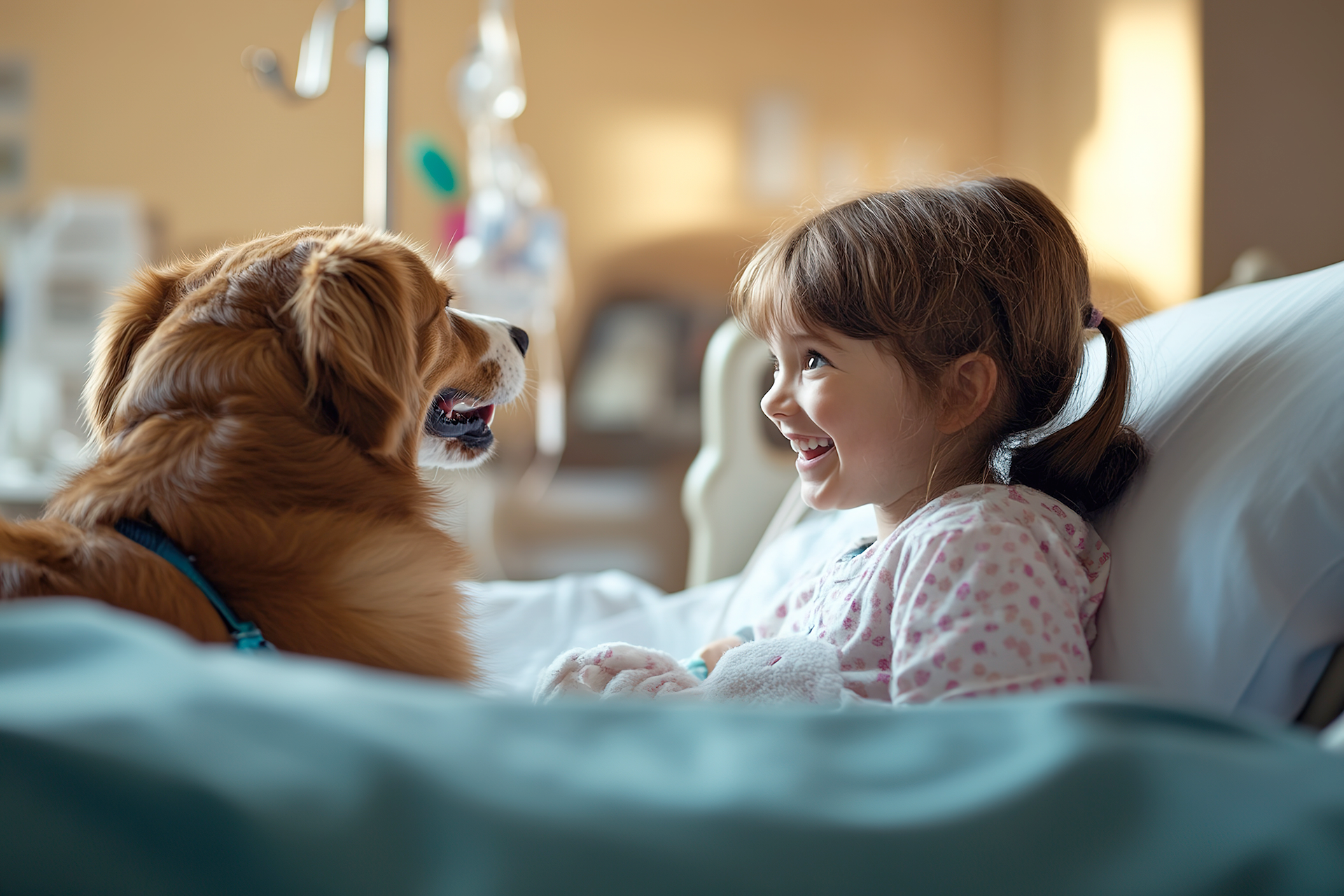
In the hospital world, where medical technology is fundamental, an innovative approach is emerging that goes beyond conventional treatments: therapy assisted by dogs. This pioneering initiative is transforming Intensive Care Units (ICUs) by integrating dogs as a key tool to promote both the emotional and physical recovery of patients.
“The program not only seeks to alleviate the negative effects of the hospital environment, but also aims to humanize these spaces, improving the quality of life of patients and offering a new path towards integral well-being.“
Dog-assisted therapy in ICUs is a response to a number of crucial needs: reducing pain, anxiety and fear, particularly in hospitalized children, who often face a highly stressful experience in these types of units. This practice also favors the creation of a warmer and less intimidating hospital environment, moving away from the rigidity and coldness that often characterizes clinical and hospital settings.
In addition, it encourages the participation of young patients in their recovery process, promoting adherence to treatment, stimulating their motivation and accelerating their physical and emotional improvement.
This novel approach opens up new horizons for intensive care, where science and empathy go hand in hand in favor of the patient’s overall health.

Impact on patient health
The positive impact of dog-assisted therapy has been widely supported by numerous studies, which demonstrate its psychological and physiological benefits in patients.
Renowned hospitals throughout Spain such as the Hospital del Mar, the Hospital 12 de Octubre and the Hospital Vall d’Hebron have already incorporated this therapy into their treatments, recognized for its immediate effects in reducing stress and anxiety, which generates a calmer environment and promotes the emotional well-being of patients.
Physiologically, interaction with dogs has been shown to have a remarkable capacity to lower blood pressure, reduce heart rate and stimulate the release of endorphins and oxytocin, hormones associated with feelings of pleasure and tranquillity.
In addition, research indicates that patients who receive visits from therapy dogs experience lower levels of the stress hormone cortisol, which not only improves their immune response, but also speeds up the recovery process. For patients with chronic illnesses or undergoing long-term treatments, the presence of a therapy dog can offer significant emotional relief.
A tool for physical and emotional rehabilitation
Therapy dogs not only offer companionship and emotional support, but also play a key role in the physical rehabilitation of patients. Those with reduced mobility or who have spent long periods in bed find in these animals an incentive to move, exercise and actively participate in their recovery.
In patients who have suffered strokes or musculoskeletal injuries, interaction with a dog can motivate them to perform small movements that, over time, contribute to the restoration of their motor skills.
In addition, dog-assisted therapy has proven to be especially beneficial for children with developmental disorders, such as autism, and for older adults with dementia. In these cases, the dogs act as social mediators, fostering communication, interaction with the environment and emotional expression. Their presence not only reduces anxiety and agitation, but also stimulates cognitive and sensory abilities.
A notable example of this type of intervention took place in 2019 at the Hospital Sant Joan de Déu, where a program of dog-assisted therapy was implemented in pediatrics, with promising results in improving the well-being and participation of children in their treatments.
Selection and training of therapy dogs
In order for the dogs to integrate successfully into the environment of an Intensive Care Unit (ICU) and other hospital spaces, they must go through a rigorous selection and training process. Not just any dog is suitable for this role; those with a calm, balanced and sociable temperament are sought, who enjoy human contact and are able to remain calm in highly controlled and often stressful environments.
The selection process begins with a behavioral evaluation in which the dog’s reactions to various stimuli, its tolerance to physical contact and its ability to respond to unforeseen events are analyzed. Once selected, the dogs begin a specific training program, which includes adaptation to noises and medical devices, interaction with people in different states of health and understanding of basic and advanced commands.
In addition, the training process also extends to healthcare professionals and dog handlers, who learn how to facilitate interaction between the dog and patients without altering the clinical environment or compromising the safety of either party.
“The selection process begins with a behavioral evaluation in which the dog’s reactions to various stimuli, its tolerance to physical contact and its ability to respond to unforeseen events are analyzed.“

The future of animal-assisted therapy in hospitals
The success of the pilot programs in different hospitals has encouraged various medical institutions to consider extending animal-assisted therapy to other areas. Specialties such as pediatrics, oncology and long-stay units have begun to evaluate the implementation of these programs, with the aim of improving
As medicine advances with cutting-edge technology, these types of initiatives remind us of the importance of the human factor and emotional support in the healing process.
In the near future, it is possible that therapy dogs will become a regular presence in hospitals, offering their unconditional support to those who need it most and reinforcing the vision of more comprehensive medical care focused on the patient’s well-being.