




The digital architecture of the connected operating room has become a priority for hospitals seeking to improve surgical efficiency, patient safety and real-time clinical management. It is no longer enough to incorporate advanced technology in isolation: the real challenge lies in connecting hospital equipment, clinical software, technical panels and supply units within the same digital ecosystem.
In this new scenario, operational efficiency depends directly on how the different elements of the operating room communicate with each other. Suspended units, technical panels, audiovisual systems, medical devices and platforms such as HERMES OR Control must work in a coordinated manner to support the clinical team.
The goal is no longer simply to equip an operating room, but to design an intelligent infrastructure capable of centralizing information, automating processes, optimizing clinical workflows and facilitating decision-making during every procedure. This approach aligns with the transformation described in the article about the digital ecosystem in the ICU, operating room and hospital, where hospital connectivity is becoming one of the pillars of modern healthcare.
Surgical digitalization does not begin with software: it begins with the architecture of the space.
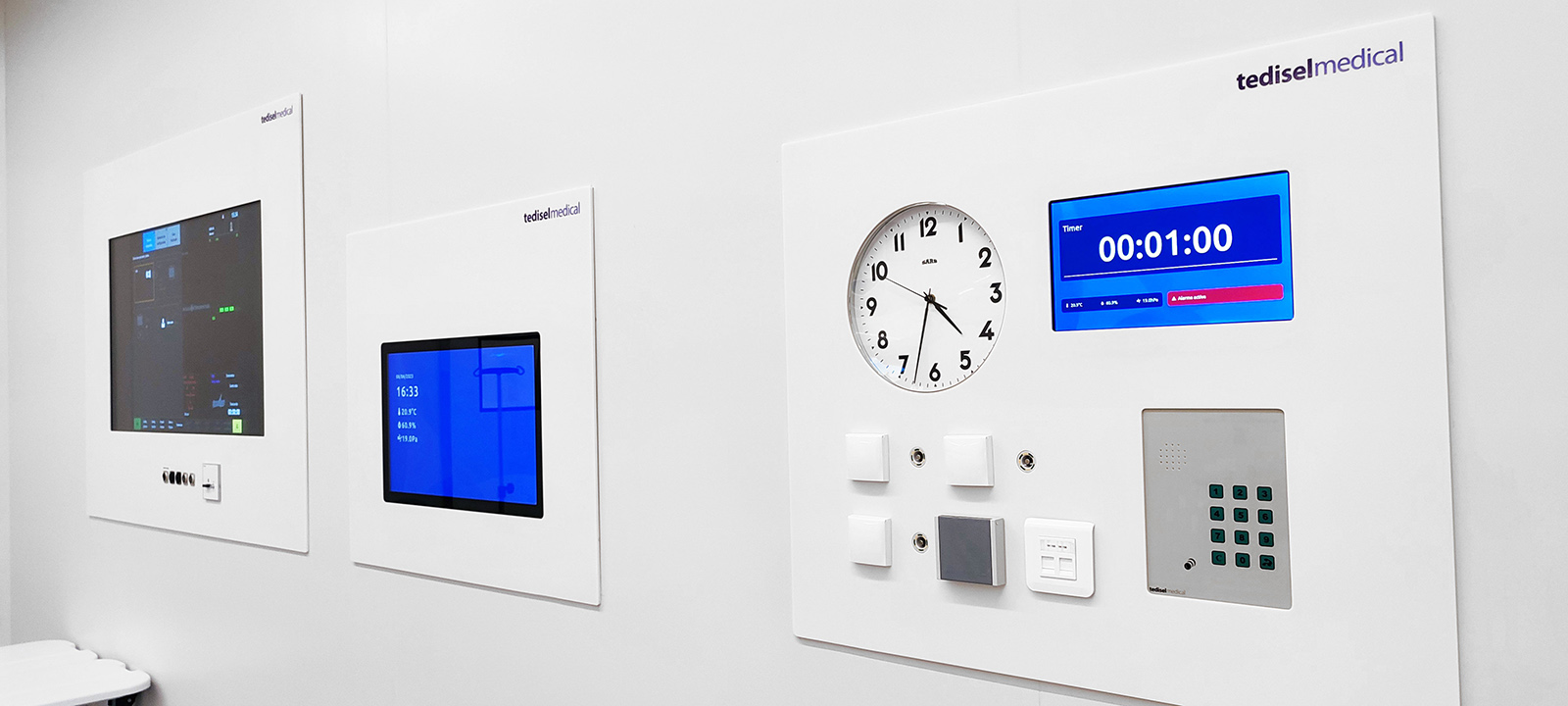
What is the digital architecture of the connected operating room?
The digital architecture of the connected operating room is the hospital design model that integrates physical equipment, digital platforms, clinical connectivity, automation and centralized data management. Its function is to transform the operating room into an interoperable environment where systems do not operate independently, but as part of a coordinated clinical network.
Unlike a conventional operating room, the connected operating room allows systems to share information and be managed from a single interface. This improves surgical coordination, reduces operational times, minimizes errors and optimizes the use of hospital equipment.
Therefore, the value does not only lie in having advanced technology available. The key is ensuring that this technology is properly connected, organized and prepared to respond to the real needs of the medical team.
Supply units: physical infrastructure for the connected operating room
One of the fundamental pillars of this architecture is suspended supply units. Ceiling columns and surgical arms no longer act solely as physical supports for medical gases, electrical connections or clinical devices. In modern digital operating rooms, they become true technological integration nodes.
Supply units help organize the clinical space, reduce visible cabling, improve ergonomics and facilitate quick access to critical equipment. This has a direct impact on patient safety, healthcare staff mobility and intraoperative efficiency.
Solutions such as Motorized Column, Non-Motorized Column and S-Column allow surgical infrastructure to adapt to different clinical configurations and levels of complexity. In this context, suspended units cease to be static elements and become active infrastructure within the hospital digital workflow.
Equipment such as ATLAS can also be part of this strategy, especially in environments where flexibility, service integration and clinical space organization are determining factors.
Surgical connectivity begins with the physical infrastructure of the operating room.
Technical panels: the nerve center of the digital surgical environment
Technical panels are another essential component within the digital architecture of the connected operating room. Traditionally associated with service distribution, they are now evolving into platforms capable of integrating environmental control, communications, monitoring, data visualization and centralized access to clinical systems.
As analyzed in the article about technical panels in operating rooms, these systems have become a key element in the evolution of the modern surgical block. Their function is not limited to housing connections. They also contribute to organizing, protecting and centralizing critical services in an environment where every second matters.
Technical panels make it possible to centralize medical gases, electrical systems, alarms, communications and digital interfaces. This facilitates maintenance, improves traceability and enables more efficient management of the surgical environment.
Systems such as Q Panel allow multiple critical services to be integrated within a structure prepared for advanced connectivity and centralized monitoring. In advanced operating rooms, these types of solutions can connect with digital platforms capable of controlling lighting, climate systems, environmental pressure, surgical video and the operational status of equipment.
HERMES OR Control: the digital layer of the intelligent operating room
Within the evolution of the connected operating room, platforms such as HERMES OR Control represent the operational intelligence layer of the system. Healthcare digitalization requires solutions capable of centralizing control, automating tasks and simplifying the interaction between clinical staff and technology.
This approach had already partially appeared in the article about technology in operating rooms and patient safety, although today’s challenge goes far beyond the individual automation of equipment. The real value lies in designing an environment where different systems can operate in a coordinated manner.
HERMES OR Control enables the management of surgical lighting, medical video, communications, environmental parameters and integrated devices from a single interface. This reduces the need for multiple independent controls and significantly improves surgical operability.
One of the major hospital challenges is reducing interruptions and unproductive time. Digital integration makes it possible to automate configurations, adapt parameters according to the procedure and streamline operating room preparation. As a result, transition times decrease, team coordination improves and surgical block performance is optimized.
The intelligent operating room does not just connect equipment: it connects processes.

Hospital interoperability: the real challenge of the connected operating room
The digitalization of the operating room depends on the ability of systems to communicate with each other. Many hospitals still work with fragmented infrastructures where systems do not share information, devices are incompatible and clinical management becomes slower and less efficient.
For this reason, interoperability has become one of the major challenges in modern hospital engineering, as already explained in the article about medical device interoperability in critical care units.
Protocols such as HL7 and DICOM enable the integration of hospital software, medical devices, imaging platforms and clinical management systems. In addition, international standards such as IEC 80001-1 establish guidelines for risk management in IT networks with connected medical devices.
An interoperable architecture enables immediate access to clinical data, complete traceability, error reduction and improved decision-making. It also facilitates predictive maintenance, remote monitoring and future technological scalability.
Operational impact of the digital architecture of the connected operating room
The integration between physical infrastructure and digital platforms has a direct impact on hospital efficiency. The World Health Organization has highlighted the importance of surgical safety and process standardization as key factors in reducing healthcare risks.
The digital architecture of the connected operating room contributes to reducing manual errors, facilitating rapid access to critical information and improving clinical coordination. It also enables surgical time optimization through better space preparation, fewer interruptions and process automation.
Another significant impact can be seen in the experience of medical staff. More intuitive interfaces, lower operational workload and improved ergonomics allow the clinical team to focus on the procedure rather than on the fragmented management of multiple devices.
This evolution can also be seen in hybrid operating room projects, where physical and digital integration converge within a single advanced clinical environment.
The connected operating room is not a technological trend: it is the new operational foundation of the modern hospital.
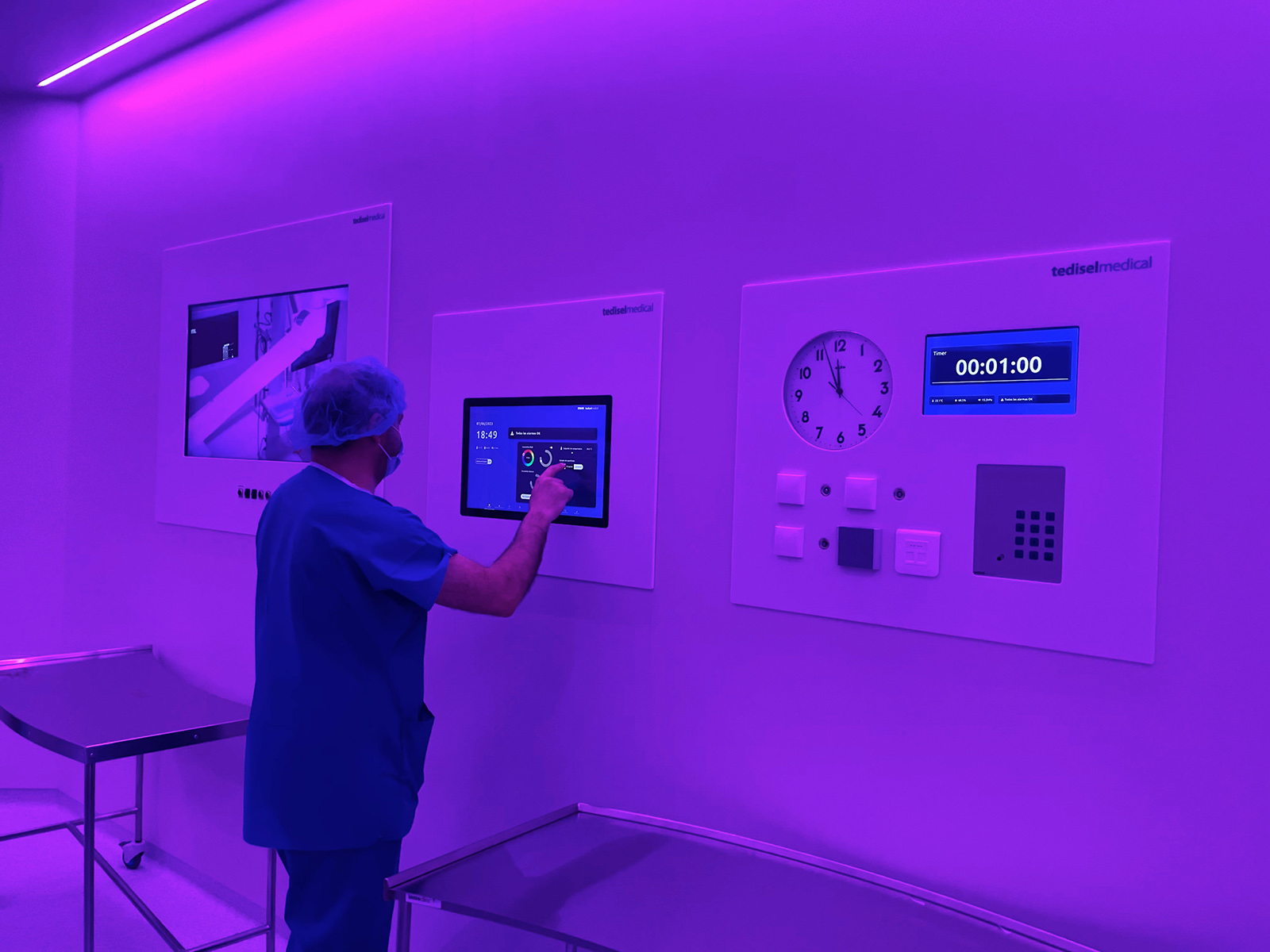
Projects related to HERMES OR Control
The digital architecture of the connected operating room becomes even more valuable when observed in real projects. Hospital installations where HERMES OR Control is integrated with technical panels, supply units and centralized control solutions demonstrate how surgical digitalization can materialize in fully functional clinical environments.
- University Hospital of Guadalajara: integration of HERMES, Q Panel, ARES and ATLAS within an advanced surgical environment.

- Hospital de Cerdanya: implementation of HERMES and Q Panel as part of a surgical control and connectivity solution.

- Hospital Rey Juan Carlos: surgical environment with digital integration and technical solutions designed to improve surgical block operability.
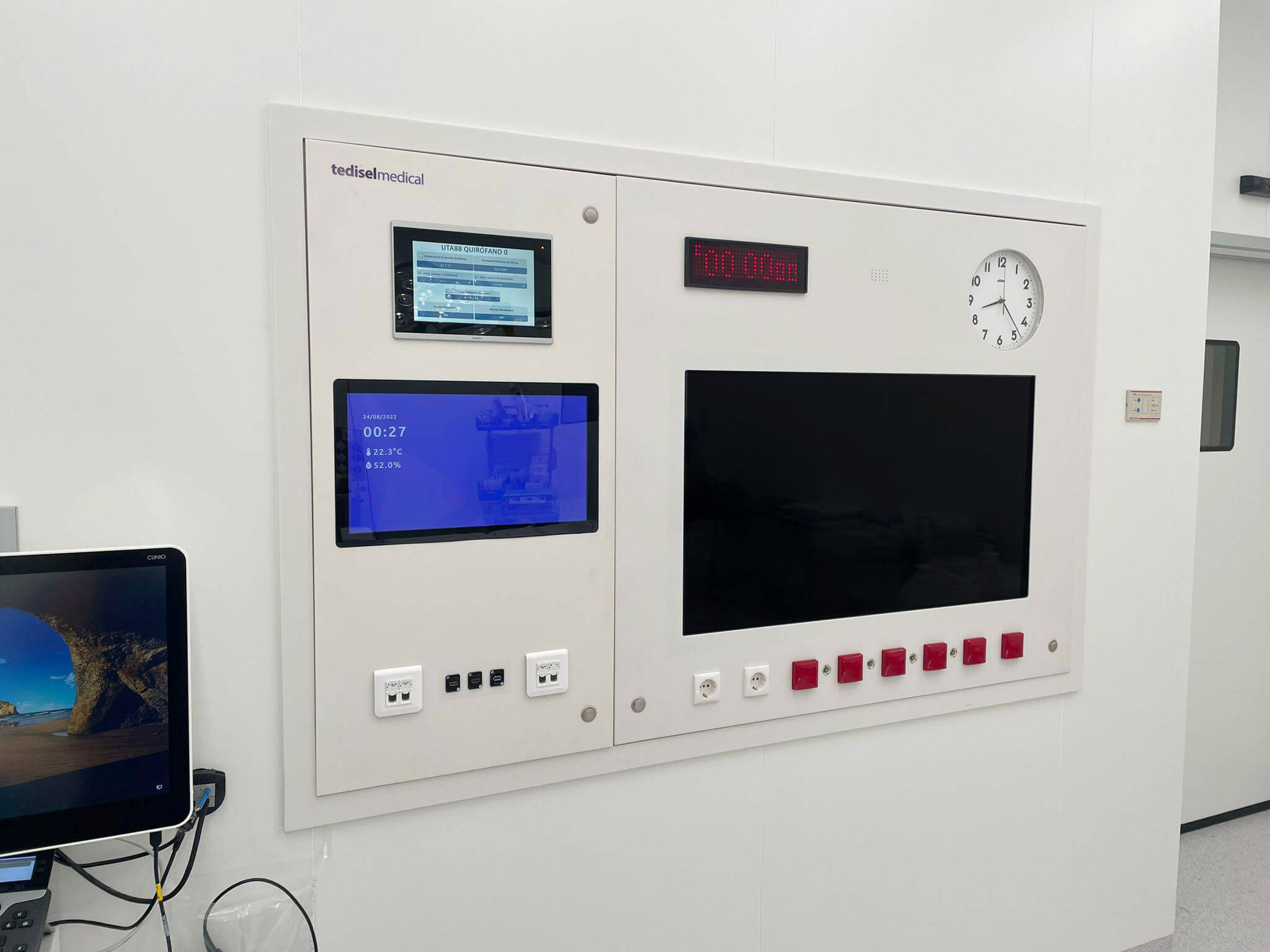
- Centre Salut CMA Granollers: project with HERMES, N270 and Q Panel focused on efficiency, connectivity and clinical management.
Conclusion
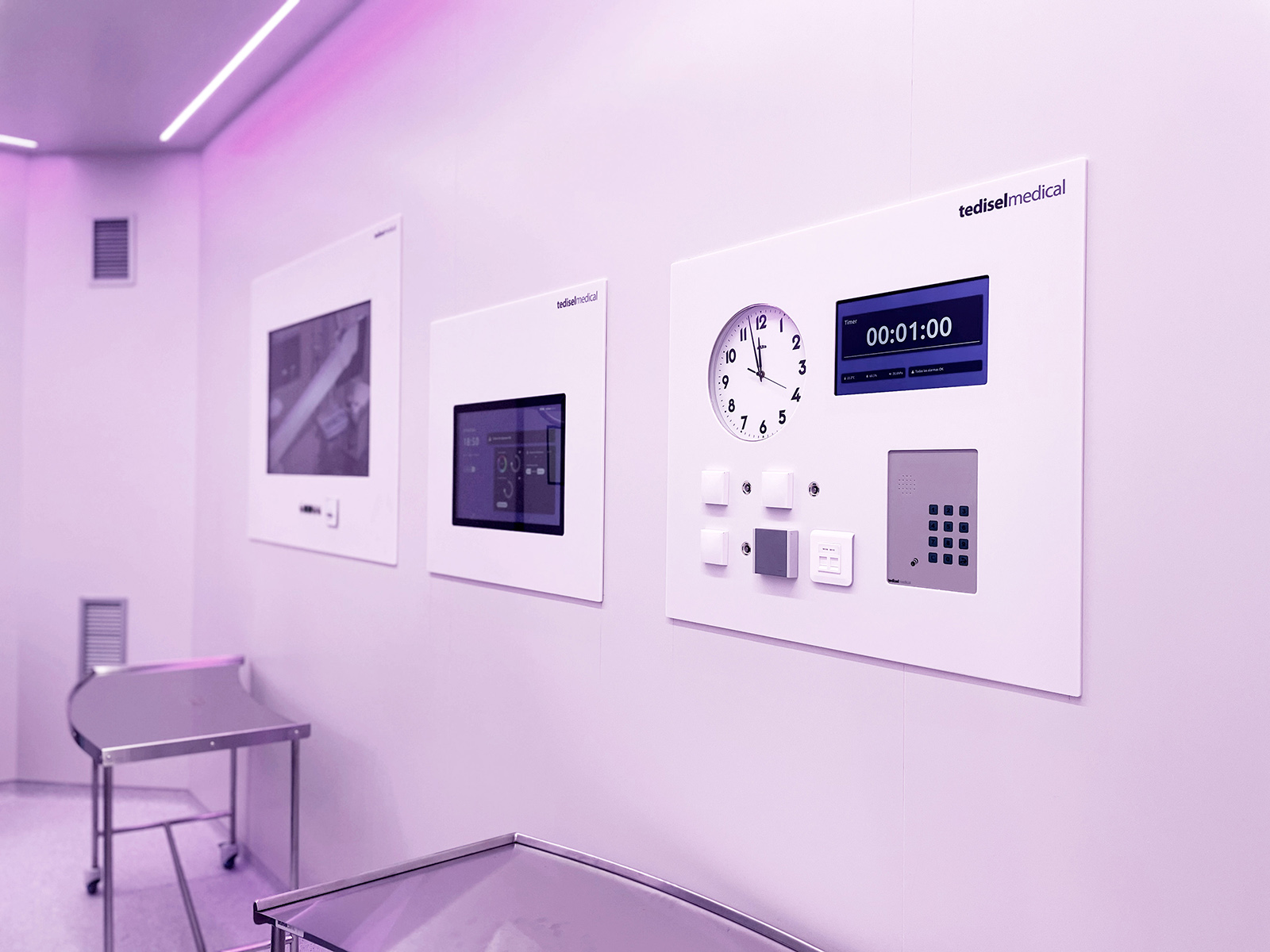
The digital architecture of the connected operating room represents a new way of understanding hospital design: a model where physical infrastructure, digital platforms and clinical management operate as a single intelligent system.
In this evolution, solutions developed by Tedisel Medical make it possible to create more efficient, safer surgical environments prepared for the future of digital surgery. The integration of HERMES OR Control, Q Panel and advanced supply units demonstrates that the transformation of the operating room does not depend on a single technology, but on a complete architecture designed to connect people, processes and devices.
Frequently asked questions about the digital architecture of the connected operating room
What is the digital architecture of the connected operating room?
The digital architecture of the connected operating room is a hospital design model that integrates physical equipment, clinical software, technical panels, supply units and digital systems to improve efficiency, safety and clinical coordination.
What is a connected operating room?
A connected operating room is a surgical environment where hospital equipment, clinical software and digital systems work together in real time to improve efficiency, safety and decision-making.
What role do supply units play in a connected operating room?
Supply units organize and connect medical devices, medical gases, electrical systems and digital solutions. They act as the physical infrastructure of the connected surgical ecosystem.
What is HERMES OR Control?
HERMES OR Control is a Tedisel Medical digital platform that centralizes the control of different surgical systems from a single interface, including lighting, video, communications and environmental parameters.
Why is hospital interoperability important?
Hospital interoperability enables medical devices, clinical software and management systems to share information efficiently. This helps reduce errors, improve traceability and optimize decision-making.