




Digital transformation in healthcare is no longer a promise for the future, but an essential reality. In critical environments such as the intensive care unit (ICU), the operating room, and the hospital in general, digitization has become a key factor in improving patient safety, optimizing clinical workflows, and facilitating faster, data-driven decision-making.
At Tedisel Medical, we understand the hospital as an integrated digital ecosystem, where technology, healthcare professionals, and patients are connected securely, efficiently, and reliably. This article explores how this digital ecosystem is built in the most demanding hospital environments and what benefits it brings to daily clinical practice.
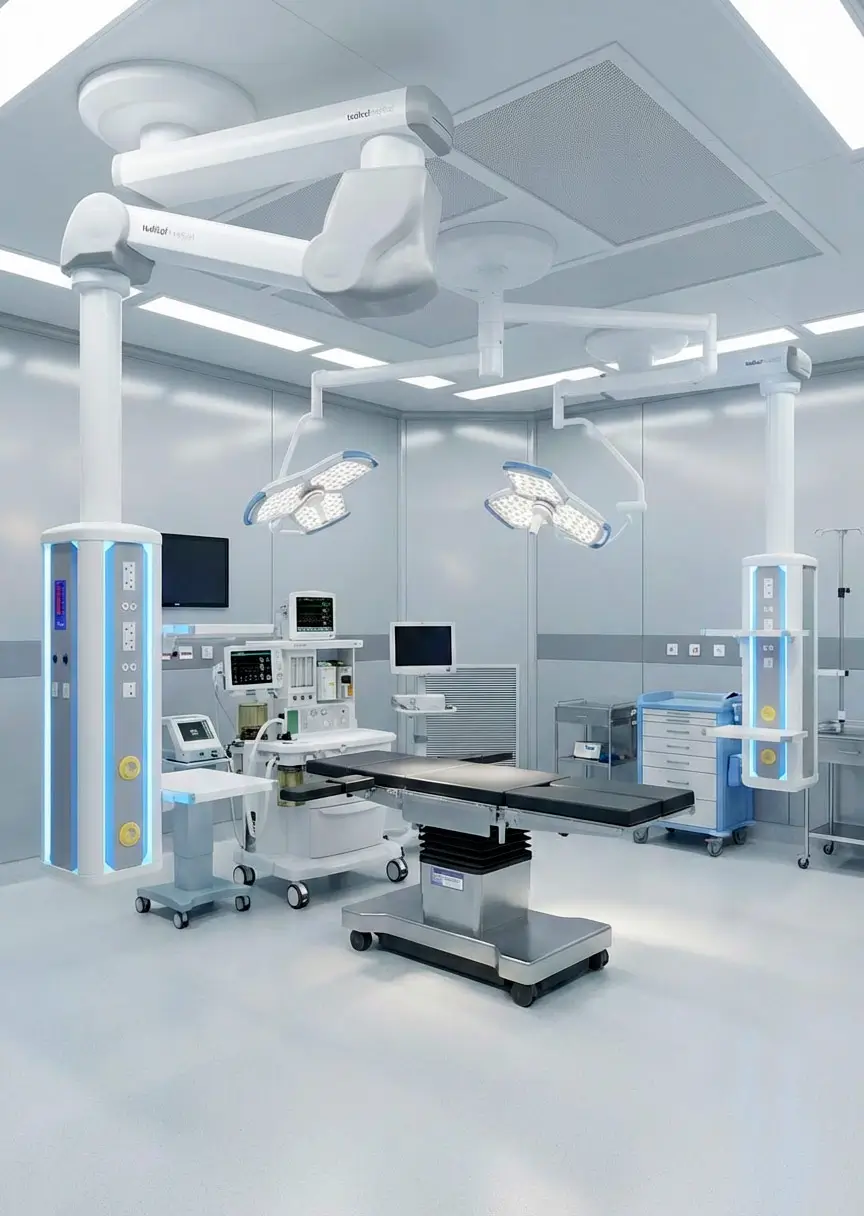
What do we mean by a digital hospital ecosystem?
A digital hospital ecosystem is the set of systems, devices, infrastructures, and applications that enable the capture, integration, visualization, and management of clinical information in real time. It is not just a matter of having advanced medical equipment, but of ensuring that all of it communicates with each other and with the hospital’s information systems.
This ecosystem is based on several fundamental pillars:
- Secure and standardized connectivity.
- Integration of medical devices.
- Interoperable clinical information systems.
- Centralized data visualization.
- Cybersecurity and information protection.
- User experience adapted to the clinical environment.
In areas such as the ICU and the operating room, where every second counts, the maturity of this ecosystem makes the difference between reactive and proactive care.

The ICU as the core of the digital ecosystem
The Intensive Care Unit is probably the hospital environment where digitization brings the most value. Critical patients generate an enormous amount of data : vital signs, respiratory parameters, drug infusion, images, lab results, and clinical notes.
Integration of medical devices
Multiparametric monitors, ventilators, infusion pumps, and dialysis systems produce continuous information. An effective digital ecosystem allows these devices to integrate automatically with the clinical information system, avoiding manual transcription and reducing errors.
Centralized, real-time monitoring
Central monitoring stations and clinical display systems allow healthcare staff to have a comprehensive view of patient status, even from remote locations within the hospital. This facilitates early detection of adverse events and improves responsiveness.
Support for clinical decision-making
Real-time data aggregation, combined with intelligent alarm systems and advanced analytics, helps prioritize care and reduce alarm fatigue, one of the major challenges in ICUs today.
The digital operating room: precision, efficiency, and safety
The modern operating room has evolved into a highly technological environment, where digital integration is essential to ensure safe and efficient procedures.
Audiovisual and data integration
In a digital operating room, images from diagnostic, endoscopy, or surgical navigation equipment are displayed in an integrated manner on high-resolution medical monitors. This allows the surgical team to access all relevant information without losing focus on the patient.
Ergonomics and workflow
The correct arrangement of monitors, articulated arms, and control systems contributes to improving the ergonomics of healthcare personnel and optimizing surgical times. A well-designed digital ecosystem reduces interruptions and facilitates coordination between professionals.
Automatic recording and traceability
The digitization of the operating room allows for the automatic recording of procedure data, times, equipment used, and clinical parameters, improving traceability, quality of care, and regulatory compliance.

The connected hospital: beyond critical areas
Although the ICU and the operating room are key environments, the digital ecosystem must extend throughout the hospital to provide truly integrated care.
Interoperability between systems
Smooth communication between hospital information systems (HIS), electronic health records (EHR), laboratory systems, and radiology is essential to avoid information silos.
Clinical mobility
Secure access to clinical information from mobile devices or distributed stations allows healthcare professionals to consult relevant data anywhere in the hospital, improving continuity of care.
Patient experience
Digitization also has a direct impact on patients, facilitating more agile processes, better communication, and more personalized care.
Technological infrastructure: the foundation of the ecosystem
A reliable digital ecosystem requires a robust infrastructure, designed specifically for healthcare environments.
Certified medical monitors and solutions
The use of certified medical monitors, with high image quality and hygienic design, is essential to ensure patient safety and compliance with healthcare regulations.
Networks and connectivity
The transmission of critical data requires stable, secure networks with low latency. Redundancy and high availability are requirements in clinical environments.
Cybersecurity
The protection of clinical data is an absolute priority. The digital ecosystem must incorporate cybersecurity measures from the design stage, ensuring the confidentiality, integrity, and availability of information.
Benefits of the hospital digital ecosystem
The implementation of an integrated digital ecosystem brings clear and measurable benefits:
- Improved patient safety.
- Reduction in clinical errors.
- Greater operational efficiency.
- Optimized workflows.
- Better experience for professionals and patients.
- Support for innovation and data-driven medicine.

The role of Tedisel Medical in digital healthcare
At Tedisel Medical, we work to support hospitals and healthcare centers in their digital transformation process. Our solutions are designed to integrate naturally into the clinical ecosystem , providing reliability, quality, and ease of use in critical environments such as the ICU and the operating room.
We believe in technology that adds clinical value, adapts to the real needs of healthcare professionals, and contributes to safer and more efficient care.
The digital ecosystem in the ICU, the operating room, and the hospital in general is already an essential element of modern healthcare. The integration of devices, intelligent visualization of information, and a solid technological infrastructure make it possible to respond to the current and future challenges of the healthcare system.
Investing in a digital ecosystem is not just a technological decision, but a strategic commitment to quality care, patient safety, and hospital sustainability. Experience and specialization make all the difference on this journey.