



Medicine is advancing by leaps and bounds, and operating rooms are one of the scenarios where technological innovation is making the most visible difference. If we think of an operating room just 30 years ago, the image was very different from today’s: less digitized equipment, less systems integration and processes much more dependent on human effort.
Today, operating rooms have become truly intelligent spaces. Minimally invasive surgery, robotics, real-time monitoring and, increasingly, solutions that guarantee not only efficiency for professionals, but also safety and confidence for patients, converge there.
In this article we will discuss how technology is transforming the work in operating rooms and what is the direct impact on patient safety. In addition, we will look at concrete examples of how products such as HERMES control software or Tedisel ceiling supply units contribute to more ergonomic, safer and more efficient surgical environments.

1. A new era in operating rooms
For decades, patient safety in surgery depended mainly on the capability of the medical team and the quality of the instruments. However, the risks were high: hospital-acquired infections, human error due to fatigue, limited monitoring and long recovery times.
Today, thanks to digitalization and the incorporation of advanced systems, these risks have been significantly reduced. Technology does not replace the medical team, but it does act as an ally that offers precision, support in decision-making and a safer and more efficient work environment.
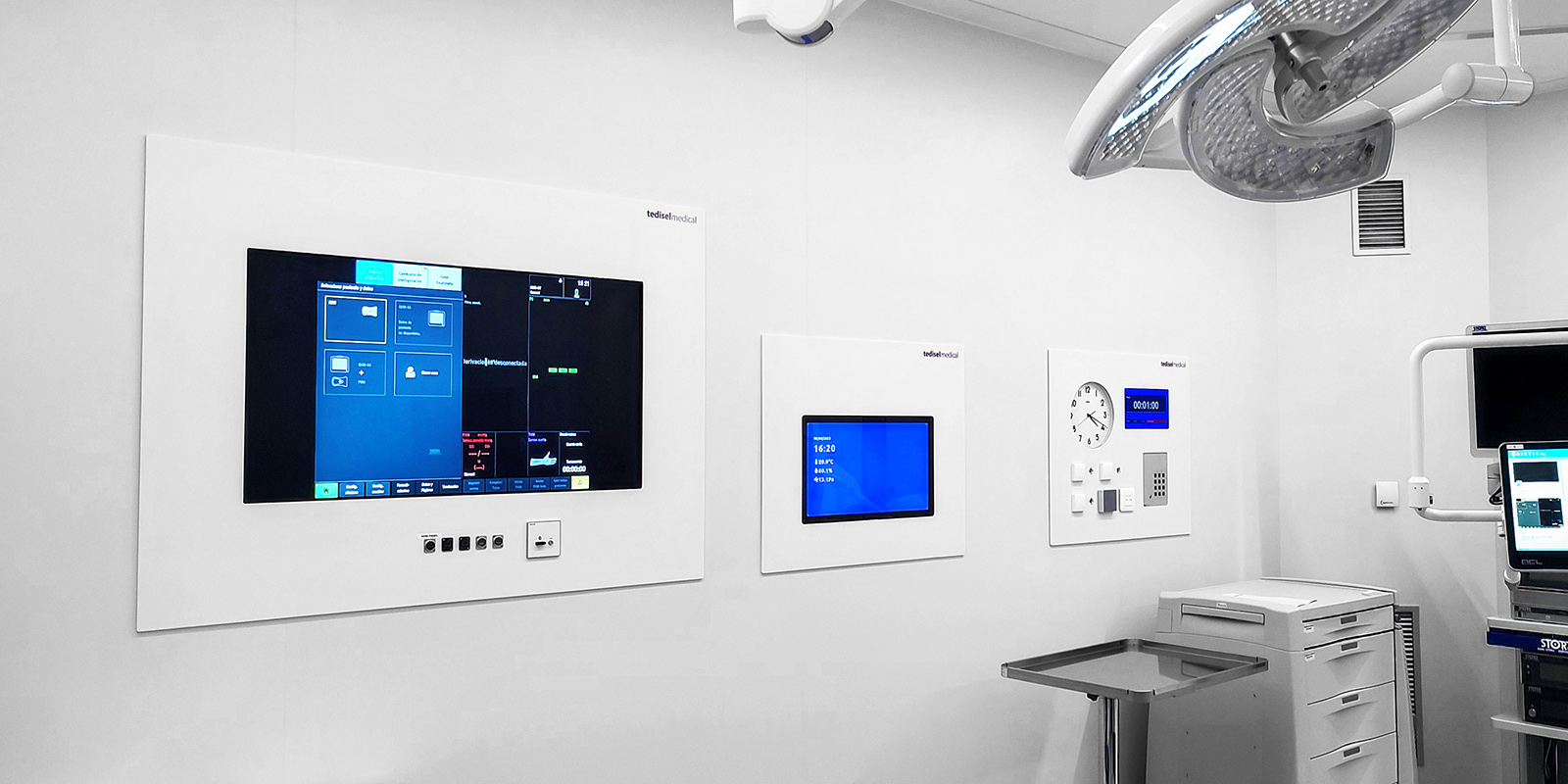
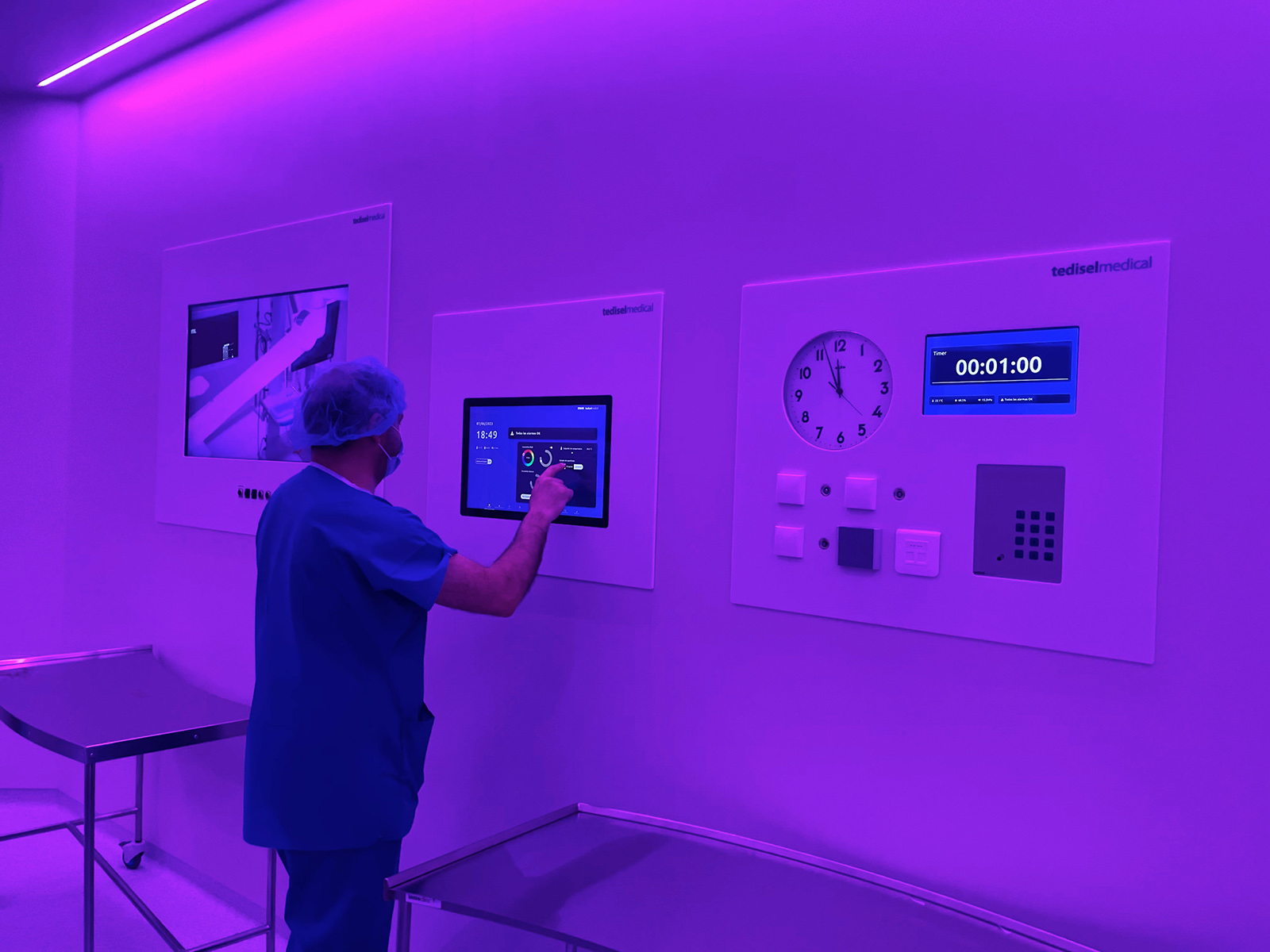
A prime example is control software systems, such as our HERMES, which transform the operating room into a fully integrated space. Thanks to this solution, different devices are centralized and coordinated from a single interface, providing efficiency and safety. One success story is that of the CMA Granollers Health Center, where each piece of equipment used to operate in isolation and now everything is managed in a unified way: from lighting, cameras and monitors, to communication systems and environmental parameters. This integration reduces the risk of errors, optimizes communication between professionals and allows the surgeon to focus all his attention on what is most important: the patient and the surgical procedure.
2. Technological advances that have transformed the operating room
- Minimally invasive and robotic surgery: Laparoscopic techniques and surgical robots have reduced the need for large incisions, which directly results in less postoperative pain and lower risks of infections. For example, a procedure that used to require weeks of recovery can now be resolved with just a few days of hospitalization.
- Advanced real-time monitoring: Today’s systems allow constant and precise observation of the patient’s vital signs. In addition, thanks to artificial intelligence algorithms, it is possible to detect minute variations that could go unnoticed by the naked eye, generating early warnings for the medical team.
- Augmented reality and surgical simulation: Surgeons can train on high-fidelity simulators and plan complex procedures with 3D images. This preparation reduces risks and increases confidence during the actual procedure.
- Digital integration and control software: This is where solutions such as those from Tedisel come into play, offering Hermes software designed to integrate the entire operating room into a unified system. This means that lighting, columns, screens and even the air-conditioning system can be managed from a single platform. The impact on safety is enormous: fewer distractions, less wasted time and greater responsiveness to any unforeseen event.
3. Ergonomics as a pillar of safety
An operating room must not only be technologically advanced, but also comfortable and efficient for the staff working in it. Ergonomics is key because surgeons and nurses spend hours in demanding positions, handling delicate equipment and responding to critical situations.
In this regard, Tediselmedical’s motorized columns represent a fundamental advance. They allow the height and position of medical equipment to be adjusted automatically and precisely.
What does this mean in practice?
- The surgeon does not need to make forced movements to reach devices.
- The nursing staff can quickly adapt the room layout according to the procedure.
- The workflow is optimized, reducing downtime and minimizing errors.
- In addition, a motorized column not only improves the comfort of the equipment, but also avoids risky situations: an incorrectly positioned cable, equipment in the wrong position or an overload of devices can become a problem during surgery. Thanks to these systems, everything is organized in a safer and more functional way.

4. Direct impact on patient safety
The key question is:
how does all this benefit the patient?
- Fewer infections: digitized operating rooms make it possible to control sterilization and instrument traceability with greater precision.
- Fewer human errors: by centralizing functions in a control software, the risk of confusion or operational errors is minimized.
- Faster recoveries: thanks to less invasive techniques and ergonomics that streamline procedures, patients experience fewer postoperative complications.
- Greater confidence: for both patients and their families, knowing that state-of-the-art technology is being used generates peace of mind.
An illustrative example: an operating room equipped with Tediselmedical’s Hermes software can, in a matter of seconds, adjust lighting, project images on high-resolution monitors and automatically record procedure data. All this allows the medical team to concentrate solely on the surgery, without wasting time on manual adjustments or repetitive checks.

5. Use cases: how technology changes daily practice
Imagine a complex cardiac surgery. The operating room is equipped with:
- Tedisel motorized columns, which organize the workspace, avoiding cables on the floor and ensuring that each piece of equipment is within proper reach.
- Centralized Hermes software, from which monitors, lighting and communication systems with other areas of the hospital are managed.
- Real-time monitoring, which detects variations in vital signs and immediately alerts the anesthesiologist.
In this scenario, the patient receives a safer procedure with less chance of complications. For the medical team, the environment is more comfortable, reducing fatigue and the risk of errors.
6. Challenges and opportunities
Despite advances, the implementation of technology in operating rooms faces challenges:
- High initial investment: equipping an operating room with advanced systems requires a significant budget.
- Constant training: personnel must receive continuous training to take full advantage of the tools.
- Equity of access: not all hospitals, especially in less developed regions, have these solutions.
However, the opportunities are enormous. The operating rooms of the future will be increasingly connected, with full data integration, predictive artificial intelligence and systems that ensure even greater safety.
7. Tediselmedical solutions: innovation at the service of patient safety
In this context, companies like Tediselmedical have positioned themselves as key allies in the transformation of operating rooms. Our products are not only focused on technology, but on the real impact it has on patient safety and well-being.
- HERMES software: centralizes the management of the different operating room systems, optimizing efficiency and reducing risks.
- Motorized operating room columns: improve the ergonomics and organization of the surgical space, ensuring a safer environment.
- Customized solutions: adapted to the specific needs of each hospital, maximizing the technological investment.
The added value of these solutions lies in the fact that they are not simply tools, but true facilitators of safety and confidence in an environment where every detail counts. The future promises even smarter operating rooms, where the synergy between healthcare professionals and technology will ensure not only better clinical outcomes, but also a more humane and safer experience for patients.
In short, the mission is clear: to make every surgical procedure more precise, more efficient and, above all, safer.