




In today’s hospitals, where medical technology offers unprecedented precision, an essential component of the patient’s environment often goes unnoticed: light. It is not only functional lighting that facilitates the work of healthcare personnel, but also lighting that directly influences the biological rhythms of the human body and, when used properly, can become as effective a therapeutic tool as medical treatment.
Implementing lighting systems that respect and support circadian cycles is an opportunity to optimize patient recovery, improve sleep quality, reduce postoperative cognitive disturbances and promote general wellbeing within healthcare facilities. In this article we explore in detail the concept of circadian lighting, its relevance in the hospital setting, the scientific evidence supporting its use, and the main technical and design challenges involved in its application.

What is circadian lighting and why does it matter in a hospital?
Humans have a “biological clock” that regulates multiple physiological functions over an approximately 24-hour cycle: the circadian rhythm.
Circadian lighting – or “human-centric lighting” when talking about human-centric design – is an artificial lighting system that seeks to mimic the dynamic patterns of natural light (intensity, spectrum, duration) to favorably influence these biological rhythms. In short: provide bright, bluish light during the day for activation; and warmer, dimmer light at night to promote rest.
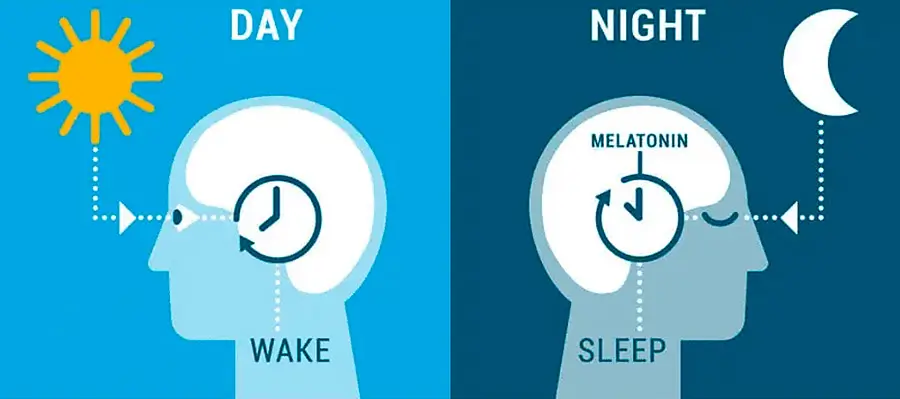

Why is this especially relevant in hospitals? Because hospitalized patients – and also staff working shifts – are subjected to lighting environments that often do not respect natural day/night patterns. They spend hours in insufficient light, or at night with lighting levels that inhibit melatonin production, or without clear day-dark contrasts. This can desynchronize the biological clock and affect the patient’s recovery, sleep, cognition or well-being.
Circadian lighting in hospitals is not a decorative luxury, but a healthcare intervention that allows “lighting to heal” and not just “lighting to see”.
Tedisel circadian lighting technology: wellness and precision in every intervention
Helping to ensure that ICU and operating room areas have precise, patient-friendly lighting is essential. It has been proven that one of the determining factors in the appearance of complications or in the slowing down of recovery is the alteration of the circadian rhythm and sleep.
Inadequate exposure to light in hospital environments -especially in the surgical area- can have a significant impact on the well-being of both patients and medical staff.
Therefore, from Tedisel Medical we offer circadian lighting solutions integrated into our products, such as ceiling supply units, designed to:
- Reduce fatigue and improve the alertness of healthcare personnel.
- Easily adapt to any surgical procedure or equipment.
- Reduce stress and promote patient comfort.
- Promote environmental hygiene, reducing the risk of contamination.
Implementation of circadian lighting in ORs and ICUs
For lighting to act as a true synchronizer of circadian rhythms and contribute to the recovery process, a carefully planned lighting design is essential. At Tedisel Medical, we integrate these principles into our products – such as ceiling supply units for operating rooms – incorporating key factors such as intensity, light spectrum or color, duration, timing of exposure and dynamic transition.

The following are the essential elements that ensure an effective circadian lighting system tailored to the most demanding hospital environments.
-
Intensity: “where we are” vs. “what we need”.
During the day, providing sufficient lighting to trigger the circadian system is a priority. In many hospital environments, light levels are often insufficient, when scientific evidence indicates that higher levels favor better biological synchronization.
At night, on the other hand, exposure to high illuminances in the patient’s visual field, especially in blue-cyan wavelengths, should be avoided so as not to interfere with melatonin secretion or disturb rest.
-
Light spectrum: blue for daytime, warm for nighttime.
During the morning and midday, light with a higher blue content promotes arousal, regulates the circadian rhythm and enhances feelings of alertness. At night, the goal is just the opposite: minimize visual stimuli by using warm color temperatures and reducing the blue component so as not to suppress melatonin production.
Studies show that hospital environments with blue-reduced lighting at night lead to higher melatonin secretion and better REM sleep quality in patients.
-
Dynamics: mimicking natural light as a model
Circadian lighting should not be static, but evolve throughout the day. At dawn, the light should offer soft activation; at midday, it should reach its maximum intensity; and at dusk, it should transition to warm tones and lower luminance.
This “light choreography” reproduces the natural solar cycle and transmits a coherent signal to the organism that reinforces the internal biological clock.
-
Synchronization of environments: patient and caregivers
Circadian design should not only focus on the patient’s room. It is also crucial to consider spaces for medical and nursing staff – such as ICUs, night corridors or rest rooms – where visual, circadian and comfort needs must be balanced.
Staff working night shifts, for example, require lighting that promotes alertness and accuracy during work, but also allows for appropriate transitions to rest. The most recent reviews emphasize that healthcare environments should seek a balance between visual efficiency, circadian well-being and psychological comfort for all users of the hospital space.
Clinical Evidence and Benefits of Circadian Lighting in Hospitals
The implementation of circadian lighting systems in hospital environments has shown very promising results, supported by a growing number of clinical studies. Although further research is still required to define optimal parameters of intensity, duration and light spectrum, current evidence points to significant improvements in both patients and healthcare staff.
Among the main benefits observed are improved sleep and increased melatonin production, faster cognitive recovery and a lower incidence of delirium and confusion, especially in intensive care units. In addition, a reduction in hospital falls, improved mood and lower anxiety in patients, as well as increased well-being, satisfaction and performance among healthcare professionals have been documented. Taken together, these effects contribute to shorter recovery times and shorter hospital stays, optimizing both the patient experience and the efficiency of the care environment.
Adopting a circadian lighting design means moving from “light to see” to “light to heal”. Incorporating therapeutic lighting strategies – bright and rich in blue component during the day, warm and dim at night – promotes faster cognitive recovery, improves emotional well-being, reduces sleep-related drug dependence and reduces complications such as delirium, confusion or falls.
At Tedisel Medical, we offer a comprehensive approach to the implementation of these solutions, adapting to the existing environment and the needs of each facility. We firmly believe in innovation applied to health, betting on improving the environmental quality and efficiency of the hospital system through light.
We look to the future with the conviction that circadian lighting will be a key tool in the medicine of tomorrow. Because, ultimately, a hospital that “sees to heal” is one that uses light not only to illuminate spaces, but to stimulate the natural biological processes of the human body, accelerating recovery and improving the experience of patients and professionals.